
Market Intelligence
Explore the Los Angeles neighborhoods and surrounding communities where multifamily investors evaluate opportunities. Each market has its own mix of housing stock, tenant demand, land-use conditions, and investment considerations.
Understanding the Market Beyond the Numbers
Multifamily investment decisions depend on more than a citywide average. Location, building age, unit mix, rent levels, operating costs, regulations, and property condition can materially change how two nearby properties perform.
The overviews below are qualitative starting points, not current pricing or underwriting reports. For property-specific sales comparables, operating assumptions, and a valuation discussion, contact The Ghobadi Team.
 Los Angeles · Downtown skyline
Los Angeles
Los Angeles encompasses a broad range of multifamily submarkets, from older courtyard and small-lot apartment buildings to larger institutional properties and newer mixed-use development. Neighborhood-level comparisons are essential: rental demand, redevelopment potential, and pricing can vary substantially over short distances.
What investors evaluate
- Unit mix, in-place rents, turnover, and renovation potential
- Local rent regulation and property-specific compliance requirements
- Access to employment, transit, and neighborhood amenities
 North Hollywood · El Portal Theatre
North Hollywood
North Hollywood combines established residential neighborhoods with a prominent arts and entertainment district and Metro connections. Its housing inventory includes smaller mid-century apartments, larger multifamily buildings, and newer projects near commercial corridors.
What investors evaluate
- Distance to transit and employment centers
- Differences between neighborhood pockets and major corridors
- Building condition, parking, and potential capital improvements
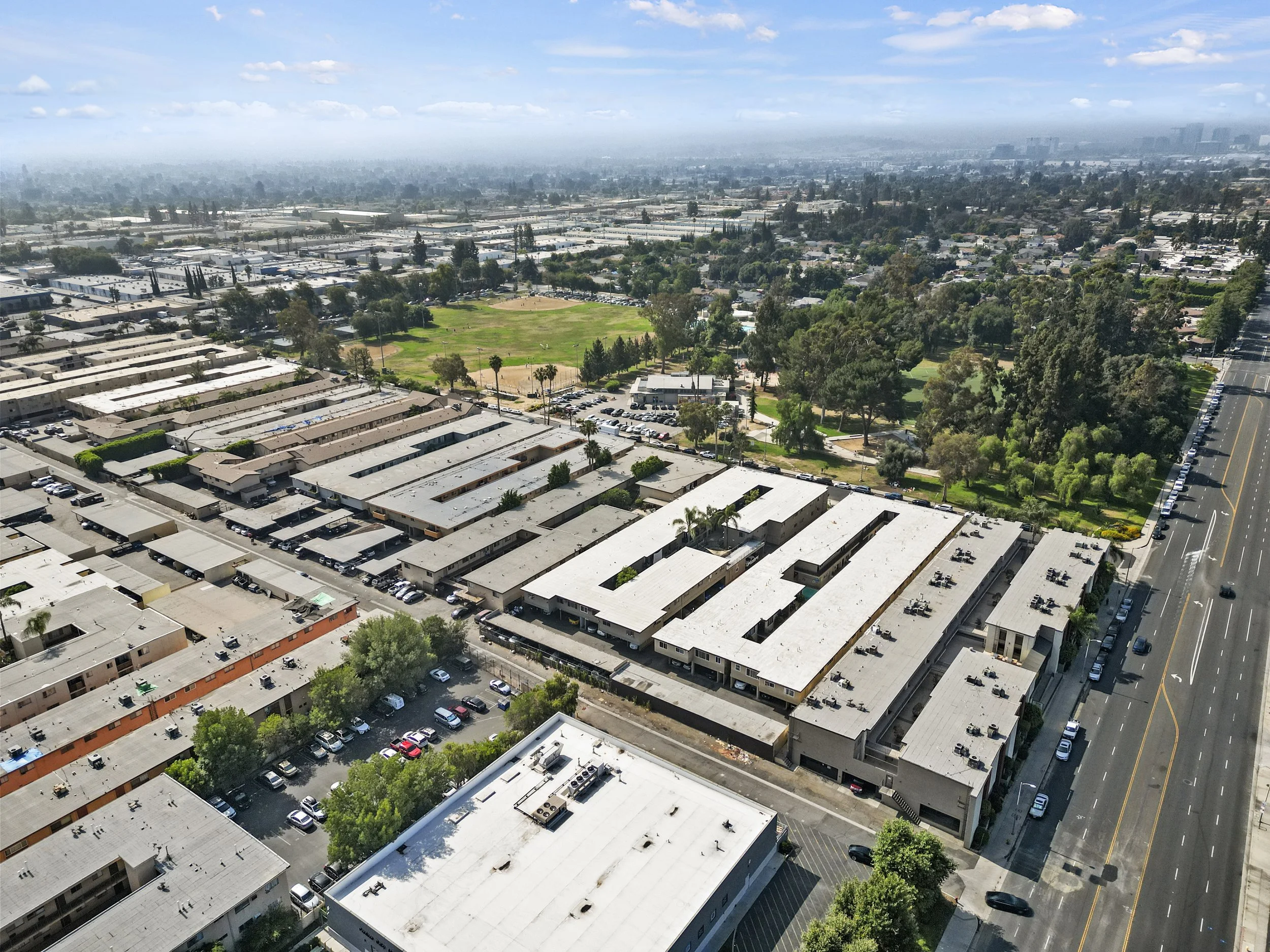 Canoga Park · Ghobadi Team listing photograph
Canoga Park
Canoga Park is a western San Fernando Valley neighborhood with a mix of residential streets, commercial corridors, and multifamily properties. Investors often assess its relative affordability within the Valley alongside tenant demand and the condition of older housing stock.
What investors evaluate
- Income and expense performance in existing apartment buildings
- Proximity to West Valley jobs, retail, and transit routes
- Deferred maintenance, unit layouts, and renovation economics
 Burbank · Downtown San Fernando Boulevard
Burbank
Burbank is a distinct municipality with a major media and entertainment employment base, established neighborhoods, and its own local regulatory framework. Multifamily opportunities range from smaller apartment properties to larger complexes near commercial corridors.
What investors evaluate
- Employment proximity and neighborhood-specific rental demand
- Applicable municipal rules and operating requirements
- Property scale, parking, and renovation potential
 Studio City · Illustrative streetscape
Studio City
Studio City has a recognizable Ventura Boulevard commercial corridor, access to nearby entertainment employment, and a blend of single-family neighborhoods and multifamily pockets. Apartment investment opportunities can be highly location-specific.
What investors evaluate
- Walkability and access to Ventura Boulevard amenities
- Property size, unit mix, and existing tenant profile
- Comparability of nearby sales and rental properties
 Sherman Oaks · Ventura Boulevard
Sherman Oaks
Sherman Oaks is an established central Valley neighborhood with retail and dining along Ventura Boulevard, access to the 101 and 405 corridors, and a range of apartment building types. Investment analysis benefits from distinguishing major streets from quieter residential pockets.
What investors evaluate
- Location and transportation access
- Older building systems and capital expenditure needs
- Unit-level rents, tenant turnover, and operating expenses
 Woodland Hills · Community photograph
Woodland Hills
Woodland Hills is a western Valley business and residential center, with offices, shopping destinations, and a variety of housing types. Multifamily opportunities vary between established apartment buildings and locations influenced by evolving commercial districts.
What investors evaluate
- Access to major employment and retail centers
- Existing property operations and long-term maintenance
- Nearby development activity and neighborhood context
 Glendale · Community photograph
Glendale
Glendale is a separate city with a substantial employment base, shopping districts, and varied residential neighborhoods. Its multifamily stock ranges from small apartment buildings to larger communities, with investment characteristics shaped by location and local rules.
What investors evaluate
- Local regulations and property-level compliance
- Access to downtown Glendale and nearby job centers
- Building vintage, unit configuration, and operating history
 Pasadena · Illustrative cityscape
Pasadena
Pasadena combines historic neighborhoods, educational and research institutions, employment centers, and established multifamily housing. Property analysis requires close attention to building characteristics and the city's specific housing rules.
What investors evaluate
- Neighborhood location and proximity to major institutions
- Local rent stabilization and tenant protection requirements
- Historic building conditions, capital needs, and comparables
Local Knowledge. Property-Specific Insight.
These neighborhood introductions provide context. For current comparable transactions, property valuation, or a conversation about your investment objectives, connect with The Ghobadi Team.
Meet The Ghobadi Team